Booking choice: The catacombs, Appian Way and aqueducts tour by minibus, with free cancellation up to 24 hours before. Book this Compare the options below
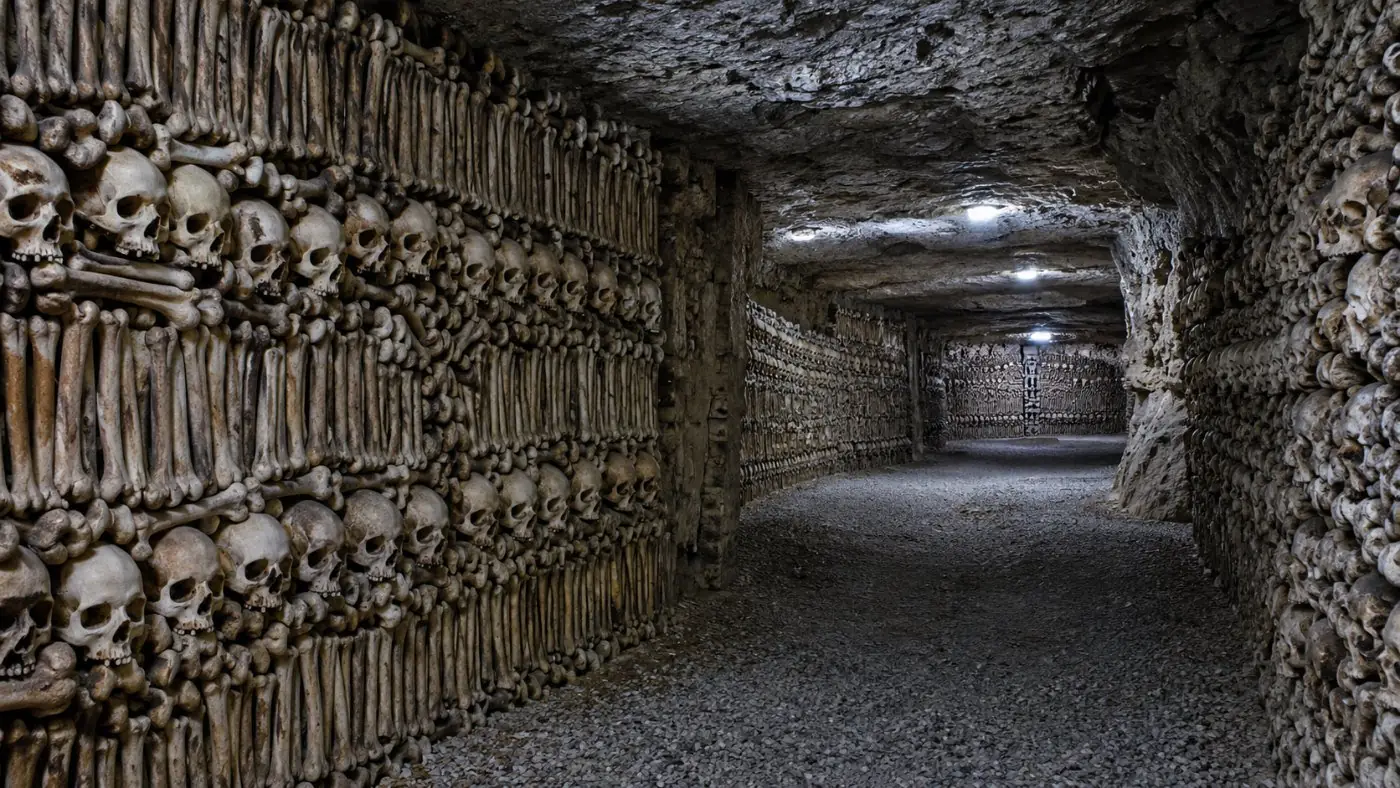
The Paris Catacombs sit about twenty metres underground in the tunnels of former quarries. The visitor route is 1.5 km long, takes about an hour, and goes down 131 steps and up 112. Private photos are allowed there, without flash or tripod.
Rome's catacombs are older and quieter. They began as cemeteries in the 2nd century, the main ones are visited only with the site's own guide, and photos are forbidden at San Callisto and San Sebastiano. Several popular questions about “the catacombs”, from the police find of 2004 to why entry is illegal, are about Paris. They are answered here, with Naples as a third option.
The quick answer
Choose Paris for the bones and Rome for the ancient world. Paris is an ossuary of several million people in former quarries, a 1.5 km route of about an hour with photos allowed. Rome's catacombs are 2nd-century and later Christian cemeteries seen with a guide (about 40 to 45 minutes at the main sites), with frescoes, crypts of popes and inscriptions, and no photos at San Callisto or San Sebastiano. Naples sits between them: wide chambers on two levels, guided hourly. The 2004 secret cinema, the 1955 entry ban and the one confirmed death all belong to Paris. For bones in Rome, visit the Capuchin Crypt.
Which catacombs are better, Paris or Rome?
Paris if you want the bones, Rome if you want history and early Christian art. Paris is an ossuary; Rome's catacombs are working cemeteries from antiquity.
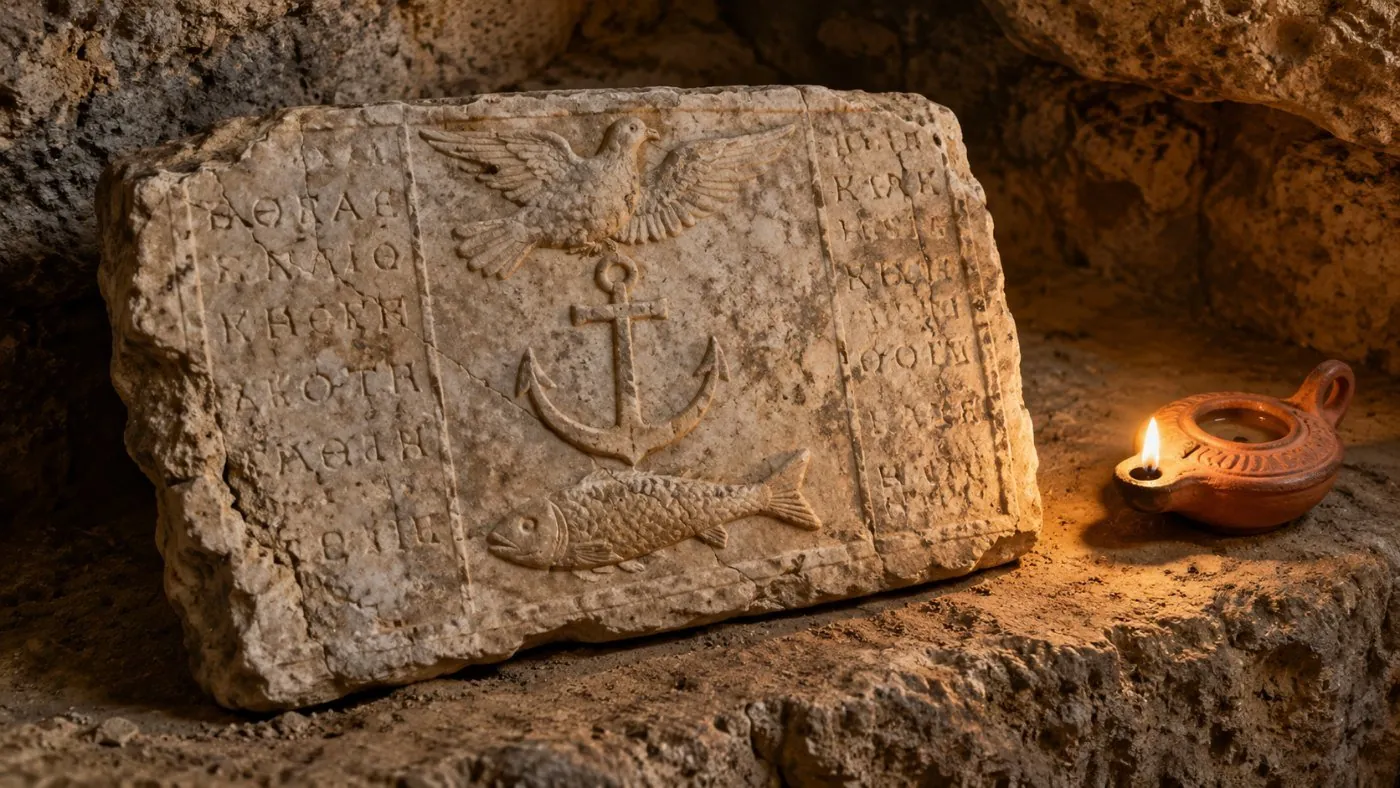
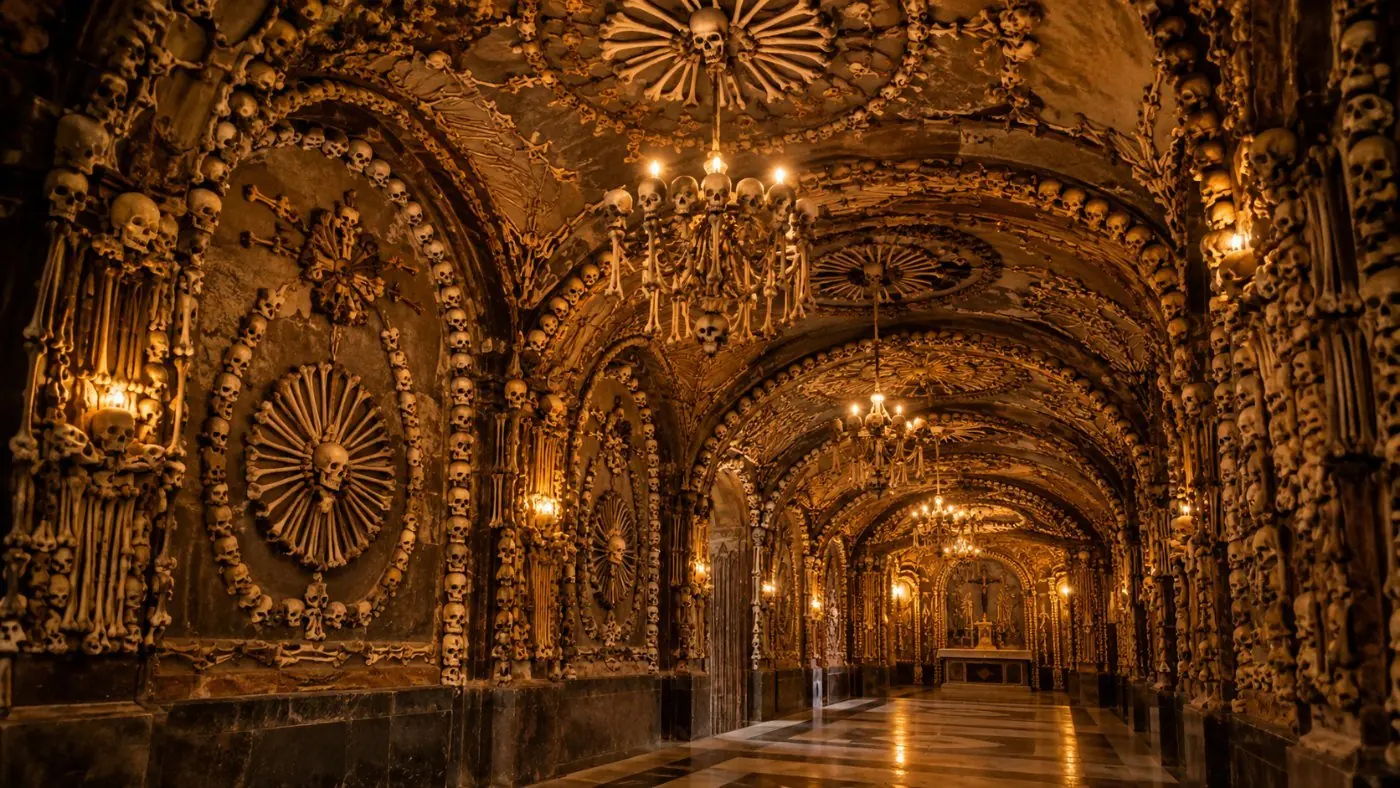
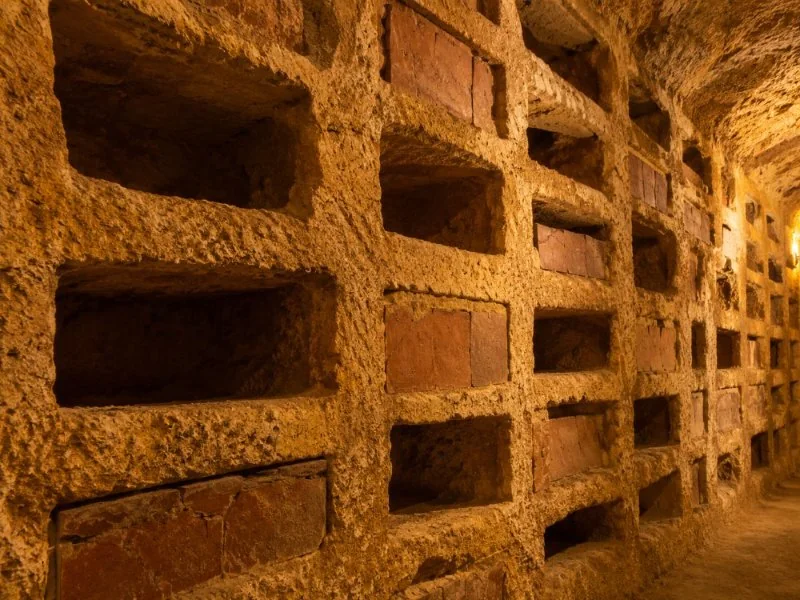
In Paris, transfers of remains from the city's cemeteries began in 1788, and the walls of skulls and long bones are the whole point of the visit. In Rome, the galleries were dug as burial places from the 2nd century, and the visit shows niches, painted chambers, crypts of martyrs and popes, and carved slabs. Most graves are empty or sealed. The table sets the three cities side by side.
| Feature | Rome | Paris | Naples |
|---|---|---|---|
| What it is | Early Christian and Jewish cemeteries | Ossuary in former quarries | Early Christian catacombs of San Gennaro and San Gaudioso |
| What you see | Galleries of niches, frescoes, inscriptions, crypts | Walls of stacked skulls and long bones | Broad chambers on two levels, early bishops' tombs |
| How you visit | With the site's guide, about 40 to 45 minutes at the main sites | A route of 1.5 km, about an hour | Guided tours on the hour, booking required |
| Photos | Forbidden at San Callisto and San Sebastiano | Allowed for private use, no flash or tripod | Ask when you book |
| Weekly closing | Varies by site | Monday | Wednesday |
Which catacombs are better, Rome or Naples?
Rome for range and some of the earliest Christian painting, Naples for space. Naples' two catacombs feel more open, with broad chambers on two levels.
In Naples, the Catacombs of San Gennaro (Via Capodimonte 13) and San Gaudioso (Via Sanità 123, beside Santa Maria della Sanità) are run by La Paranza, a social cooperative from the Rione Sanità that began with San Gaudioso in 2006. Guided tours run every hour from 10:00 to 17:00, reservation is mandatory, and they close on Wednesdays, per their site. San Gaudioso is known for unusual burial customs that its site describes as “mysterious burials and macabre rituals”.
Rome offers seven open catacombs instead of two, crypts of popes, and some of the earliest Christian images in the West.
What did police discover in the catacombs in 2004?
A secret cinema, and it was in Paris, not Rome. Police found a fully equipped movie theatre in a cavern under the Trocadéro area, with a screen, seats, projection equipment and a bar.
A group of urban explorers called La Mexicaine de Perforation claimed it, and the story was reported in early September 2004. It sits in the unofficial quarry tunnels that run beyond the Paris visitor route.
Nothing like it applies in Rome. The Roman catacombs are sacred sites in the care of a Vatican commission, entered with the site's own guide on a fixed route, and closed ones open on request with a custodian.
Why is it illegal to go into the catacombs?
In Paris, a 1955 prefectural order bans entry to the old quarry tunnels beyond the official route without a special permit. The reasons are safety and conservation.
Those tunnels run for roughly 300 km under the city, with risks of collapse, flooding and getting lost, and offenders can be fined. In Rome nothing is illegal about a visit. The rules are simple: you go down with the site's guide, in a group, and you may not leave it. At San Callisto, no one can visit on their own. Closed Roman catacombs can be requested from the Commission for groups of up to 15. More practical rules are in the visiting tips guide.
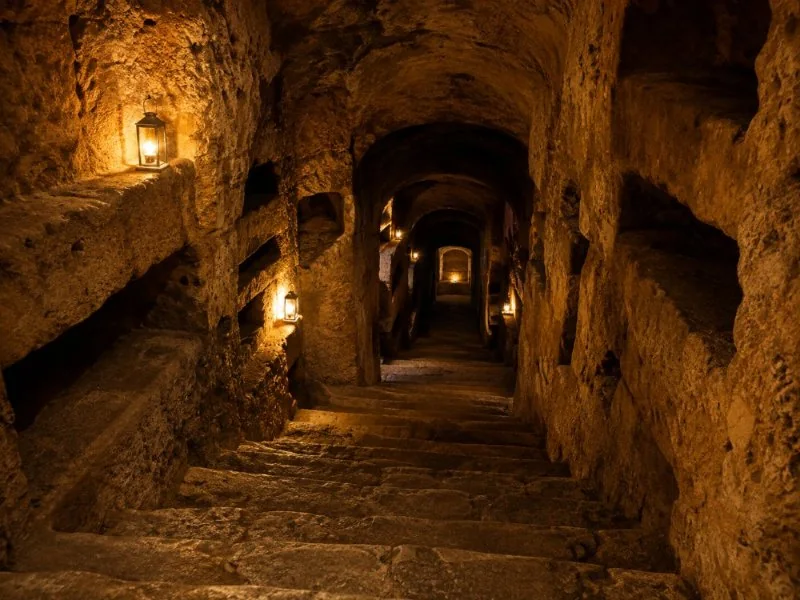
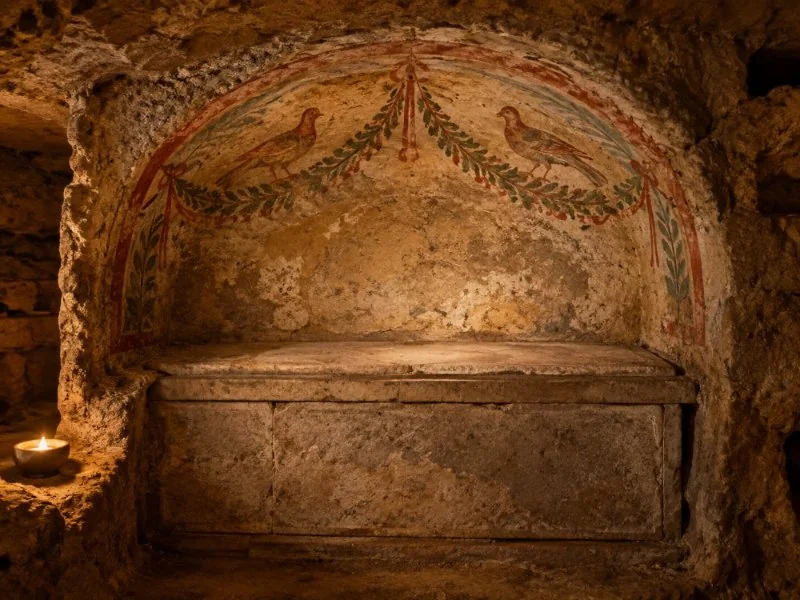
The official San Callisto ticket, with the guided visit through the Crypt of the Popes.
Book thisHow many have died in the catacombs?
In Paris, one death is officially confirmed: Philibert Aspairt, a hospital doorkeeper who got lost in 1793 and whose body was found in 1804. In Rome the question means burials, and there are hundreds of thousands.
Aspairt was a doorkeeper at the Val-de-Grâce hospital. For Rome, the Italian bishops' daily Avvenire estimates 500,000 to 750,000 tombs across the city's catacombs, with a little over 20,000 inscriptions found. Those were burials of the community, spread over centuries. The detail is in who is buried in the catacombs.
What do the catacombs smell like?
Mostly of cool, damp air. Rome's galleries stay at about 16 to 17 C with high humidity, per San Callisto and San Sebastiano.
Think of a cellar or a cave rather than anything unpleasant: still air, stone and earth. The tombs are ancient, and most are empty or sealed. Bring a light layer in summer, when the change from the street is sharp. Paris is a little cooler, at about 14 C.
Where can you see bones in Rome?
At the Capuchin Crypt on Via Veneto. Its chapels are decorated with the bones of about 3,700 to 4,000 Capuchin friars, and it is a crypt from the 17th to 19th centuries, not a catacomb.
The crypt lies under the church of Santa Maria della Concezione at Via Vittorio Veneto 27, in the centre, and its official site lists it as open every day. Its museum has a St Francis in Meditation attributed to Caravaggio. A combined Capuchin Crypt and catacomb tour pairs the bones with a Roman catacomb by coach. The differences are set out in Capuchin Crypt or catacombs.
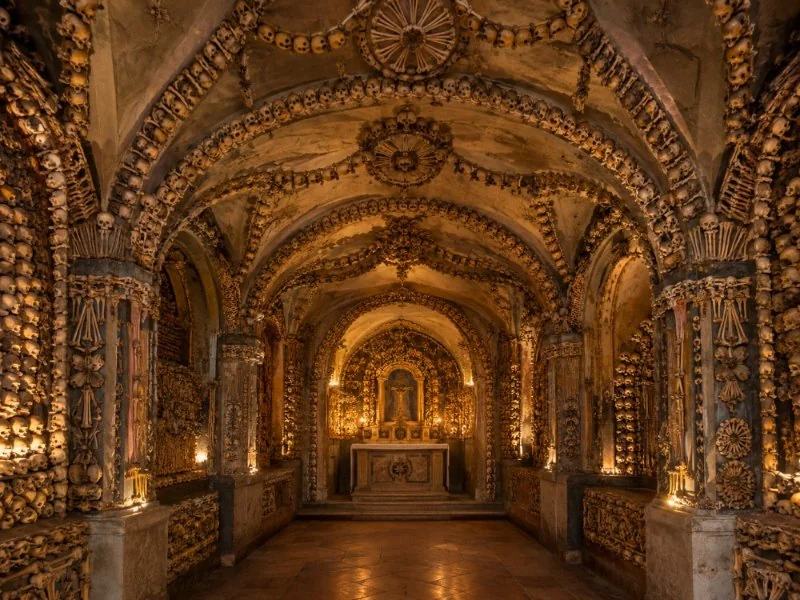
The Capuchin bone chapels and museum, then a coach to a Roman catacomb, from Piazza Barberini.
Book thisWhich should you choose on a Rome trip?
See a Roman catacomb for the history, and add the Capuchin Crypt if bones are what you came for.
- For history and early Christian art: San Callisto, Priscilla or Domitilla.
- For an easy half day with transport: a minibus or golf cart tour to the Appian Way catacombs.
- For bones: the Capuchin Crypt, alone or on a combined tour.
- For both in an evening: the after-hours tour of the Capuchin Crypt and Priscilla.
The price is shown at checkout and moves with the date; what changes it is transport, what is bundled and group size. Compare the options on the homepage.
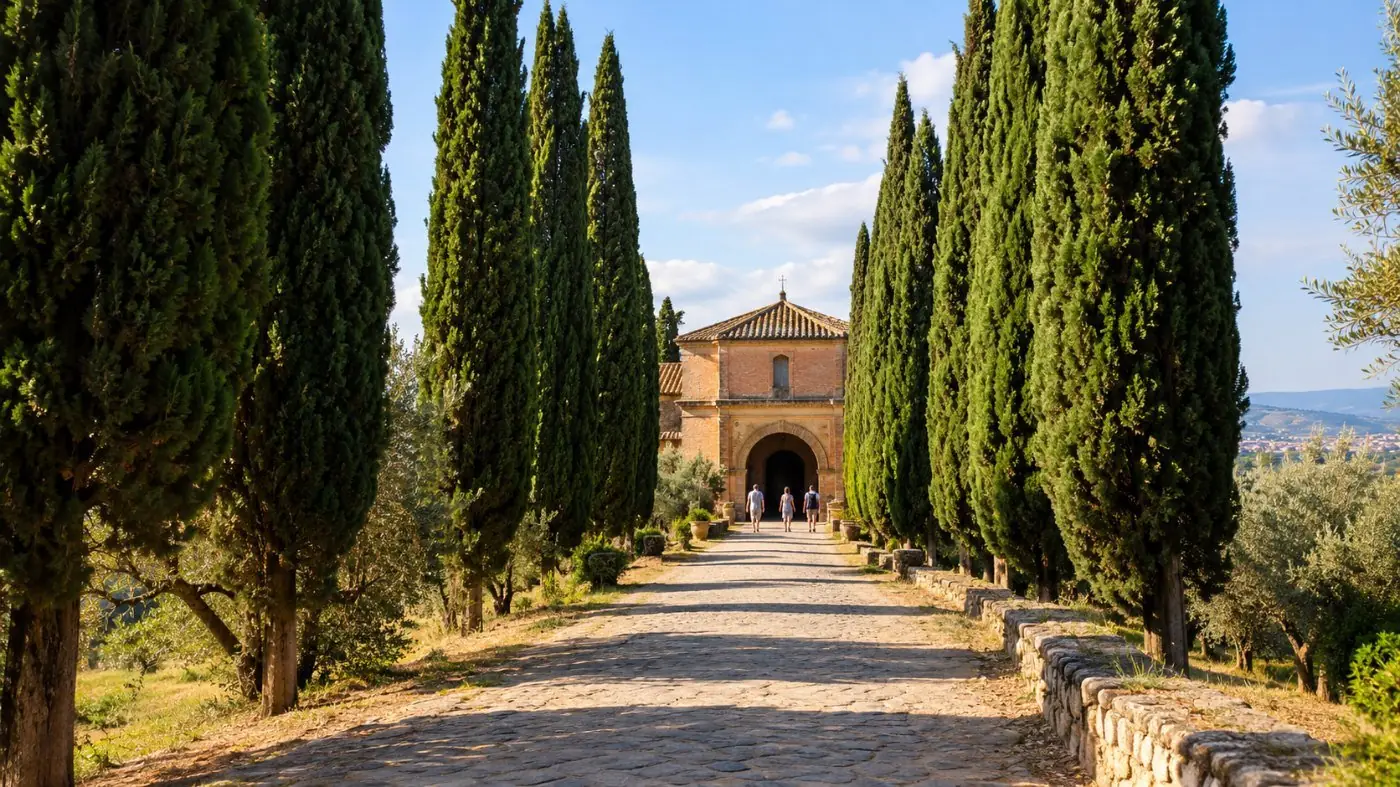
A small group in a private minibus: the Appian Way on foot, the aqueducts and a catacomb at the end of the day.
Book thisFrequently asked questions
Are there bones in the Rome catacombs?
Few on view. Most graves are empty or sealed, although some niches still show remains behind broken slabs. The bone-decorated chapels in Rome are in the Capuchin Crypt.
Can I take photos in the Rome catacombs?
Not at San Callisto or San Sebastiano, where photos and videos are forbidden. Tour listings for the other catacombs also say no photography inside.
Are the Paris catacombs longer than the Rome ones?
The Paris visitor route is 1.5 km. A Rome visit covers a short stretch of a much larger network, about 150 km across the city, in about 40 to 45 minutes.
Can I cancel a tour?
The tours on this site offer free cancellation up to 24 hours before the start.
Ready to book
Choose your catacombs tour
Free cancellation on every option, per each listing. Booked on GetYourGuide.
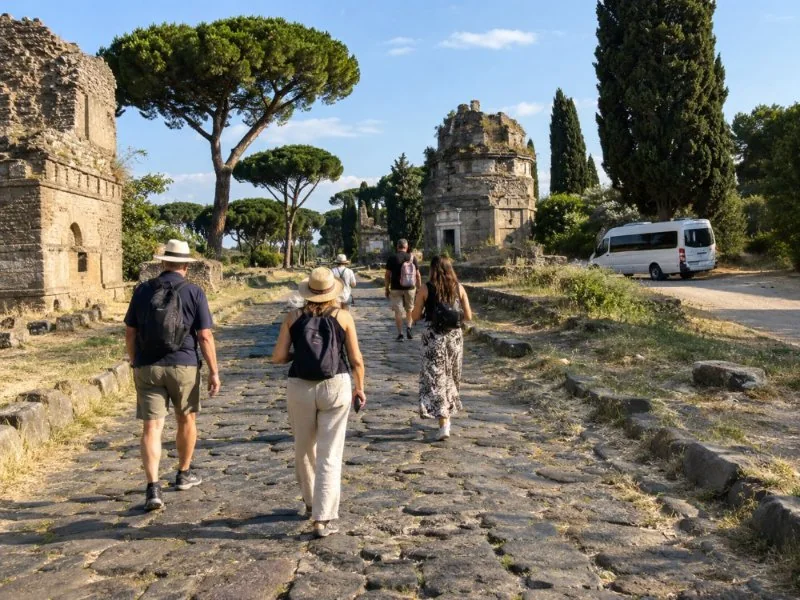
Catacombs, Appian Way & Aqueducts by Minibus
- A private air-conditioned minibus from Piramide metro station and back, with an English-speaking guide
- Entry to the Catacombs of San Sebastiano or Domitilla, depending on the day, with the site's guided visit
- A walk on a stretch of the Appian Way and the outside of the Mausoleum of Cecilia Metella
Capuchin Crypt & Catacombs with Transfers
- Entry to the Capuchin Crypt and Museum, with an audio guide
- Entry to one of the Roman catacombs with a guided visit (the listing does not name which)
- The basilica of San Martino ai Monti and its underground rooms, except on the after-hours option
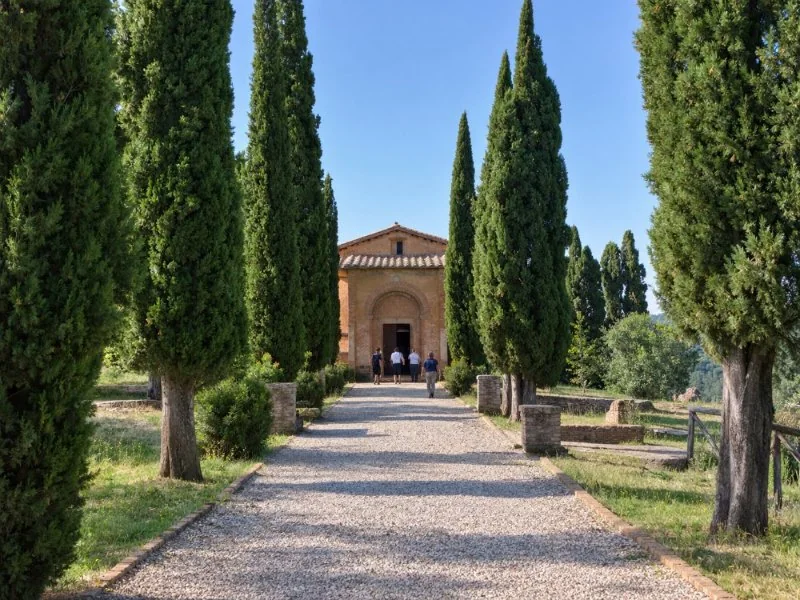
San Callisto Entry & Guided Visit
- Entry to the Catacombs of San Callisto with the guided visit the site runs for every visitor
- The Crypt of the Popes, the crypt of St Cecilia and the cubicles of the sacraments
- Meet at the ticket office at Via Appia Antica 110, ten minutes before your slot